

Written by Naomi Jespersen, 2025 PROMISE Scholar
What is your education background?
I did my bachelor's in biology. I was always intrigued by medicine, but didn’t think I would be a good doctor; having a life in my hands would be a lot of pressure. I wanted to contribute, but without treating patients. In the beginning, I thought, “You like biology, you’re good at math. Why not pursue the engineering side of biology?” I loved it and had an amazing time. Originally, I didn’t know I would have a career in research, but I was exposed to it during my undergraduate. When doing my PhD, I switched to biomedical engineering because I could create a tool, technique, or material that could impact patients. When I was looking for postdoctoral positions, I switched to focus on cancer biology. It's okay to switch gears a lot! I hadn’t worked on cancer before, but I was interested as it's such a big problem. I brought my engineering angle to a lab that was cancer-focused and provided something they didn't have, something that now defines my lab as we research biomedical engineering approaches to cancer biology. In the end, I combined the different steps of my career to create something that makes sense. I like that I bring a different expertise in trying to answer biological and medical questions. When I tell people, they often say, “Oh wow, and you changed from this to that. How did you overcome not knowing anything?” I usually tell them that I read a lot and worked hard. Yes, that's the way to do it.
Of the projects your lab is pursuing, which is your favorite?
That's a bad question. I don't like to say “favorite” because it’s not fair. All projects are extremely important because they answer something. I will say I’m fascinated by one current project because it's something that I didn’t expect to be true in the beginning. We know that changes to a tumor’s composition can alter how patients respond to therapy. Stiffer tumors—or ones with more collagen—have been linked to worse patient outcomes. Patients are treated heavily with chemotherapy, but we found that when treated with therapy, their cells change and start secreting certain proteins. These proteins indicate we are creating a loop: the more we treat patients, the more they have these proteins that lead them to respond worse to therapy. Therefore, we must ask, “Should we be using chemo, or should we do something to complement it?” For me, I cannot tell patients not to receive chemo. Chemo kills the cancer, so we are working to identify what can overcome that negative effect of chemo. I like this project because its hypothesis was initially based on unbelievable data. I'm interested in it because I didn’t think it could happen.
What is one thing most people would be surprised to know about you?
I consider myself a chef. If I wasn’t a scientist, I would want to have a restaurant and cook international foods. People always assume that it would be Spanish food, but I love to cook and learn every single cuisine—it's one of my favorite things to do. When I have close friends over, I ask them to teach me something from their specific cuisine. So I cook Thai food, Mediterranean food; a good friend taught me to make sushi. I like to make various types of foods—it's something that I love.
Who do you look up to and why?
I have a lot of people I look up to. Usually, I look for women who have done something differently and are role models. At Sanford Research, I look up to Dr. Michelle Baack. She's my superhero. I don’t know how she does all the things; she’s such an inspiration. There are people, like her, that I want to resemble in 10 to 15 years, but there are also colleagues who are inspirations for many other reasons. I like to have role models in areas that are not related to science, like someone who is maybe a “super mom.” I think that it's important to get closer to others and create a network. But also, I love looking up to others who are doing an amazing job, but might not be related to me. I can still say, “Wow, this is fantastic!”
And how do you feel knowing that there's probably people looking up to you in that regard?
Does it feel like a responsibility? A joy? How would you describe that? I didn’t originally have role models—that took a really long time. My first female role model in science didn't come until the middle of my postdoctoral research, so I didn’t have good female role models during graduate school. I had good teachers, but they weren’t doing interesting research—they were mainly teaching. I had wonderful male mentors that helped me in my career, but I wish I had a female to talk to. When someone approaches me now, I try to be available because I know how much I would have loved a female mentor. Being one is a joy, but it's also a responsibility. One of the things I do is create a comic book that highlights contemporary role models. If you ask a girl who their female role model in science is, they will say Marie Curie, but probably no one else. Reaching to Marie Curie’s time isn’t relevant, so the purpose of the comic book is to highlight scientists from current times who are relatable. In our case, we want to feature women and underrepresented groups, particularly Hispanic scientists. I care a lot about our reach and bringing help wherever it’s needed. I’m involved in many mentoring programs because I didn’t have them; I think it can change the fate of others. Those in the next generation are the leaders of the future, so we have to support them as much as we can.
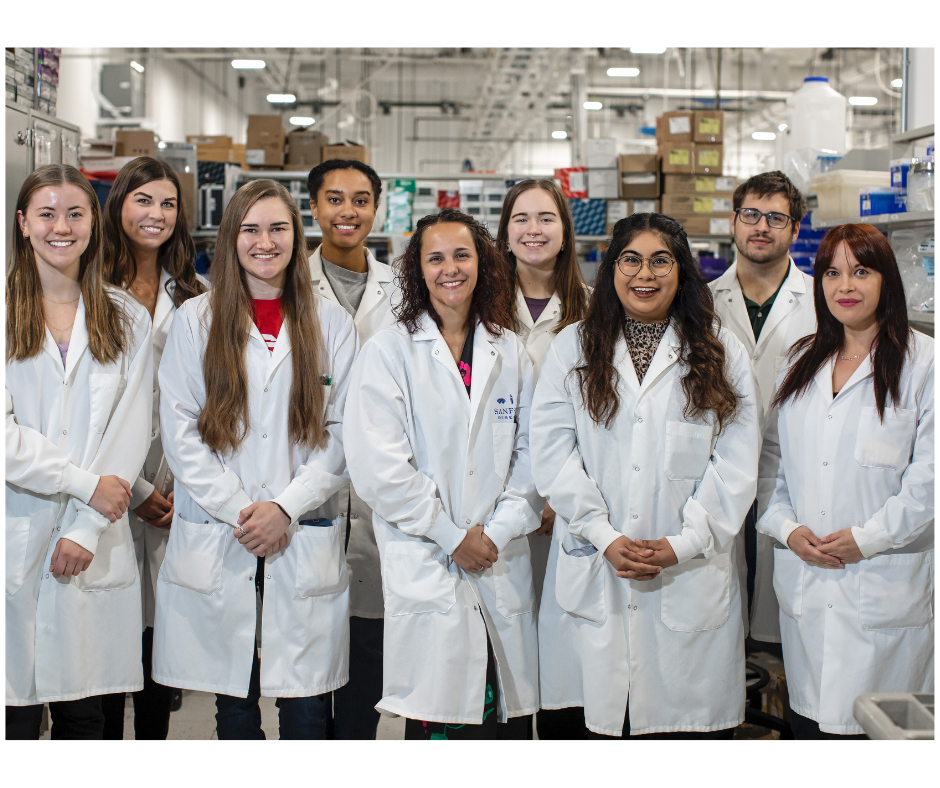
More about her journey to Sanford Research:
Bachelor’s Degree - Biology - University of Leon, Spain
Master’s Degree - Animal Medicine and Surgery - University of Salamanca, Spain
Doctorate Degree - Animal Medicine and Surgery - University of Salamanca, Spain
Postdoctoral Research Associate - Cancer Biology - Washington University in St. Louis School of Medicine, St. Louis, MO