

Written by Addison Gordon, 2025 PROMISE Scholar
What is your lab’s main focus?
In my lab, we are looking at tumor infiltrating nerves. We are looking at how they affect disease progression and how they change brain function.
What led you to choose research?
I was originally going for pre-med, but then I started working in a lab and fell in love with research. I then changed my major from Pre-med to Biology and continued working in that lab for quite some time.
How long have you had a lab at Sanford?
I have had a lab at Sanford Research for 17 years.
What are your hobbies outside of the lab?
As a mom you don’t have a lot of freedom for hobbies, but I do enjoy playing with my pets and spending time with my children. I have 3 biological children and 1 adopted son. They are 20, 19, 18, 17 years old. They are all boys.
What is your favorite part about research?
My favorite part about research is the thinking part. I enjoy piecing together the puzzle by reading research papers and preparing for my experiments.
What is the most challenging part about research as a PI?
Managing people is the hardest part of being a PI because it is one thing we do not get any training on. The science part of being a PI is what we are trained to do (coming up with hypothesis-driven projects, testing them, doing stats, considering alterative approaches, writing scientifically, giving oral presentations, etc). How to deal with team members that may not get along and need to find a way to work together...no training on that. Helping a team member re-gain motivation when it seems to have decreased (i.e.,less productivity in the lab)...no training on that. How to direct graduate students...no training on that. How to determine when it’s time to terminate someone in the lab...no training on that. These are all difficult conversations to navigate and critically impact the lab culture and productivity and yet there is nothing in our more formal training as postdocs or early faculty that really prepares us for that. Typically, this happens more by talking to senior level faculty members and asking for their advice (which is incredibly helpful)...but there is no formal training in this aspect of being a PI, so it’s a real challenge (especially in the beginning).
How do you cope with your failures or setbacks?
Research is always about failures or setbacks so you can’t get caught up in that. I let myself have a pity party for a day and then come back the next day with a fresh mind and ready to work.
Do you enjoy teamwork or individual work?
I enjoy working as a team because everyone brings their own ideas that you yourself might not have thought of. Working as a team, you can get more done in less time.
How did your major in college prepare you?
My major in college gave me a broad foundation to start my research career, but if I could go back and change my major I would double major in neuroscience and biology because it would have prepared me for my career now. I think the thing that prepared me the most for my research career was doing research as an undergraduate. Being involved in research is the best way to help you in your research career.
Do you have any words of wisdom?
Being a woman is hard; women wear many different hats. These various roles can be an asset to the lab by bringing new and different ideas that others may not visualize. I also don’t believe I can have a true work life balance. I think of it as more of a juggling act. A ball might drop at times, but you can always pick it back up.
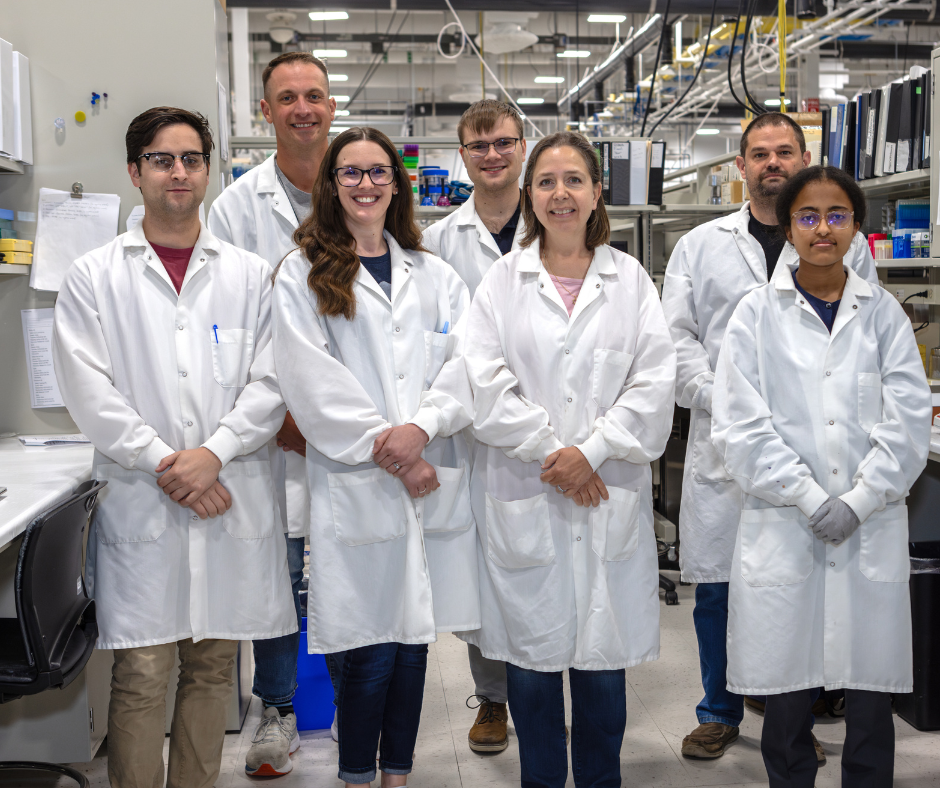
Dr. Paola Vermeer’s Career Journey
Undergraduate degree: Brandeis University in Biology
Graduate Degree: Columbia University College of Physicians and Surgeons in Developmental Neurobiology
Post-doctoral fellowship: Howard Hughes Medical Institute – University of Iowa